Questions about criminal defense.
Answers to common questions about California misdemeanor and felony cases, DUI, drug, domestic violence and juvenile matters.
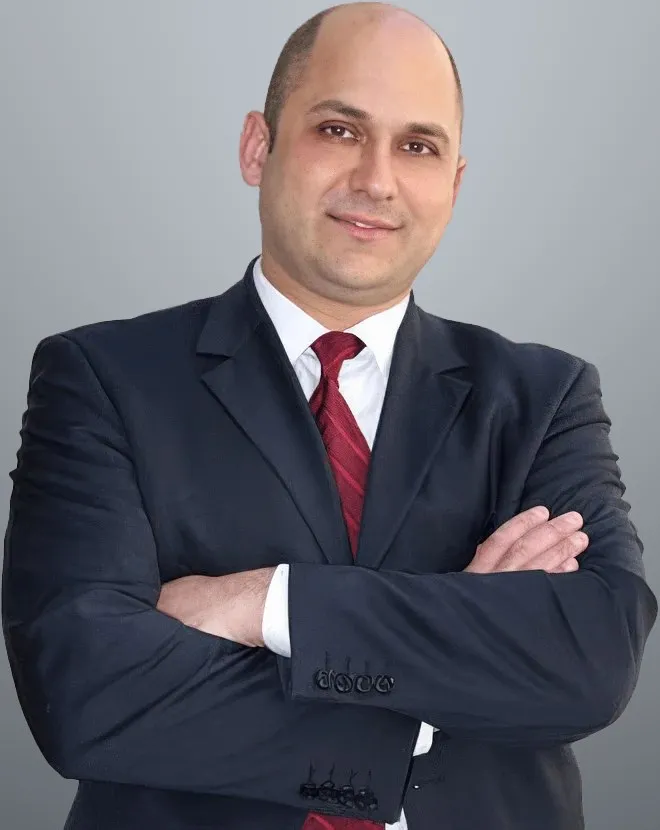
Answers before the first call.
General information, not legal advice about any particular case. Ask Marc about the law and deadlines that apply to yours.
Getting started
Start with a call, text or email
Does Pelta Law take matters other than felonies?
The practice focuses on felony defense and also accepts misdemeanor cases. Pelta Law also takes DUI, domestic violence, restraining order and juvenile matters, and matters where a professional license is at stake. Whether a particular matter fits the practice is decided after the conflict check and the initial review.
Read more on Meet The Attorney, Marc Pelta →What happens on the first call?
The first step is a conflict check, which needs only the names of the people involved, the county, the type of charge, custody status and any court date. Once the check is clear, Marc Pelta reviews the paperwork and the stage of the case with the caller and explains the next court event. Any engagement is then set out in writing before work begins.
Read more on Meet The Attorney, Marc Pelta →Which counties does Pelta Law cover?
Pelta Law accepts felony and misdemeanor cases in the nine Bay Area counties: San Francisco, Alameda, Santa Clara, San Mateo, Contra Costa, Marin, Solano, Napa and Sonoma. The office is at Fox Plaza, 1390 Market Street, Suite 200, San Francisco, with appointments by arrangement.
Read more on Marc Pelta, Former Prosecutor →Does Marc Pelta take referrals from other attorneys?
Yes. Pelta Law accepts felony and misdemeanor referrals, plus second opinions, trial consulting and co-counsel by agreement from other attorneys. A conflict check is completed before any case detail is shared. The For Attorneys page describes the initial referral process.
Read more on Marc Pelta, Former Prosecutor →What should I include in an initial email?
Start with a name, a callback number and the county. Mention an approaching court date or custody status. Do not include case facts or documents before a conflict check.
Read more on Contact Marc Pelta →What should a family member have ready when calling about someone in custody?
The person's full legal name and date of birth, the facility and county, the booking number if known, the arresting agency, and any court date already set. If a public defender has already been appointed, say so. Do not repeat what the person said about the case.
Read more on Contact Marc Pelta →Felony and misdemeanor
Charges in California courts
What is the difference between a felony and a misdemeanor in California?
A felony is punishable by state prison, or by county jail under Penal Code section 1170(h). A misdemeanor carries no more than 364 days in county jail under section 18.5. Many offenses are wobblers filed either way, and the filing choice affects release conditions and case length.
Read more on San Francisco Felony and Violent Crimes Defense Attorney →Can a felony be reduced to a misdemeanor?
A judge can reduce a wobbler under Penal Code section 17(b): before trial on the court's own motion or a party's motion, at sentencing when the punishment imposed is not state prison or county jail under section 1170(h), and when probation is granted or on application later. Straight felonies cannot be reduced that way. Whether a court does so depends on the facts and the record.
Read more on San Francisco Felony and Violent Crimes Defense Attorney →How long does a felony case take in a Bay Area court?
Timelines vary by county and by whether the accused is in custody. The statutory deadlines are short, but time is often waived to allow investigation and negotiation. Felony cases commonly take many months and sometimes more than a year.
Read more on San Francisco Felony and Violent Crimes Defense Attorney →Should someone talk to the police before charges are filed?
Anyone contacted by an investigator has the right to decline an interview and to ask for a lawyer. Statements made before charges are filed become part of the charging decision. Speaking with counsel first allows that decision to be made with the full picture.
Read more on San Francisco Felony and Violent Crimes Defense Attorney →Does Pelta Law handle felony cases outside San Francisco?
Yes. The practice covers the nine Bay Area counties: San Francisco, Alameda, Santa Clara, San Mateo, Contra Costa, Marin, Solano, Napa and Sonoma. The office is at Fox Plaza, 1390 Market Street, Suite 200, San Francisco, with appointments by arrangement.
Read more on San Francisco Felony and Violent Crimes Defense Attorney →Where is a San Francisco felony case heard?
Most criminal cases in San Francisco are heard at the Hall of Justice, 850 Bryant Street. The court's own website says some criminal matters are heard at its other locations. The courtroom and time for a particular hearing are set by the court, and the paperwork given at release or arraignment governs.
Read more on San Francisco Criminal Defense Attorney: The Fox Plaza Office →How soon after an arrest is the first court date in San Francisco?
A person held in custody must generally be brought before a judge within 48 hours of arrest, excluding Sundays and holidays. That first appearance is usually the arraignment. A person released after booking is given a date to appear instead, and the District Attorney may file charges later or decline to file.
Read more on San Francisco Criminal Defense Attorney: The Fox Plaza Office →DUI and repeat DUI
DUI charges and prior convictions
Do I need a lawyer for a first DUI in California?
A first DUI is usually a misdemeanor, but a conviction brings a criminal record, a license suspension, a fine and a required program, and counts as a prior for ten years. The DMV case has its own short deadline. Both cases are usually reviewed together before either is decided.
Read more on San Francisco DUI Defense From a Former Prosecutor →When is a DUI a felony in California?
A DUI can be charged as a felony when someone else is injured, when it is a fourth DUI in ten years, when there is a prior felony DUI within ten years, or when someone dies. Otherwise it is ordinarily a misdemeanor.
Read more on San Francisco DUI Defense From a Former Prosecutor →Does a DUI from another state count as a prior in California?
Generally yes, if the out-of-state offense would have been a DUI under California law and falls inside the look-back period. The prosecution must still prove the prior with an adequate record, and counsel reviews that record before any plea discussion.
Read more on Repeat DUI Defense in the San Francisco Bay Area →Does a wet reckless count as a prior DUI?
Yes. A conviction for reckless driving involving alcohol or drugs under Vehicle Code 23103.5 is treated as a prior DUI when a later DUI is sentenced. It is a lighter first conviction, not a clean record.
Read more on Repeat DUI Defense in the San Francisco Bay Area →Can a second DUI be charged as a felony?
Not on the count alone. A second or third DUI without injury is generally a misdemeanor. A fourth inside the look-back period may be charged as a felony. So may a DUI within ten years of a prior DUI or injury DUI that was punished as a felony.
Read more on Repeat DUI Defense in the San Francisco Bay Area →Will the DMV wait for the court case before acting?
No. The administrative per se action proceeds on its own, and the hearing must generally be requested within ten days of receiving the notice of suspension, usually served at the arrest. A court result can affect the DMV action later; a missed request generally cannot be undone.
Read more on Repeat DUI Defense in the San Francisco Bay Area →Drug offenses
Possession, sales and searches
Is possession for sale a felony in California?
Yes. Health and Safety Code 11351 and 11378 are straight felonies that cannot be reduced to misdemeanors, and Proposition 47 did not change them. Simple possession for personal use is usually a misdemeanor. The line between the two often comes down to quantity, packaging and a narcotics officer's opinion.
Read more on San Francisco Felony Drug Defense From a Former Prosecutor →Does PC 1000 diversion apply to sales or possession for sale?
No. Penal Code 1000 is limited to personal-use offenses such as simple possession and being under the influence. Mental health diversion under Penal Code 1001.36 is broader and can apply to sales and possession for sale where a qualifying mental health disorder was a significant factor in the conduct.
Read more on San Francisco Felony Drug Defense From a Former Prosecutor →What happens if the search that found the drugs was illegal?
The defense files a motion under Penal Code 1538.5 asking the court to suppress the evidence. If the motion is granted, the prosecution may be unable to proceed without the drugs. The motion can be heard at the preliminary hearing or afterward in the trial court.
Read more on San Francisco Felony Drug Defense From a Former Prosecutor →Assault, domestic violence and restraining orders
Allegations between people who know each other
What is the difference between assault and battery in California?
Assault under PC 240 is an attempt to use force with the present ability to do it; no contact is needed. Battery under PC 242 is the actual use of force, and any unwanted touching can qualify. The two are often charged together, and the evidence decides which applies.
Read more on San Francisco Assault and Battery Defense From a Former Prosecutor →Can the other person drop the charges?
No. In California the district attorney, not the person who was hurt, decides whether to file and whether to continue a case. That person's account still matters, and a change or refusal to testify affects what the prosecution can prove. Contact can violate a protective order.
Read more on San Francisco Assault and Battery Defense From a Former Prosecutor →Can the person who called the police drop the charges?
No. The district attorney, not the complaining witness, decides whether a case is filed and continues. A reluctant witness is one factor, but prosecutors can go forward on 911 recordings, body camera footage, photographs and statements from the scene, within the rules of evidence.
Read more on San Francisco Domestic Violence Defense From a Former Prosecutor →Will I be able to go back to my home?
Not always right away. A protective order can bar a person from the shared home and from contact with the other party, even when both want to talk. Violating it is a separate offense, so belongings are retrieved through a police civil standby.
Read more on San Francisco Domestic Violence Defense From a Former Prosecutor →Can the respondent keep firearms while an order is in effect?
No. Possession under any of these orders is a crime (Penal Code 29825). A domestic violence respondent has 24 hours from service to surrender firearms and ammunition to law enforcement, or sell or store them with a licensed dealer, and 48 hours to file the receipt (Family Code 6389).
Read more on Restraining Order Defense in the San Francisco Bay Area →The petitioner keeps texting. Can the respondent reply?
A temporary order usually prohibits all contact, including replies to messages the petitioner sends first. The petitioner cannot waive the order; only the court can change it. If the order prohibits contact, a reply can be charged as a violation under Penal Code 273.6, or under Penal Code 166(c)(1) if the order came from the criminal court. Preserved messages are commonly used as evidence at the hearing.
Read more on Restraining Order Defense in the San Francisco Bay Area →Three Strikes and Romero motions
Prior strikes and dismissal motions
Does a strike from many years ago still count?
Generally yes. California's Three Strikes law has no washout period, so a qualifying conviction from decades ago can still be alleged as a strike. The age of the prior does matter in a Romero motion, where remoteness and a clean record since are among the factors a court weighs.
Read more on Three Strikes and Romero Motions in the San Francisco Bay Area →Can the district attorney drop a strike allegation?
Yes. A prosecutor may move to dismiss a prior strike in the furtherance of justice, and strike allegations are sometimes resolved through negotiation. Whether that happens depends on the office, the charge and the record. Separately, the court has its own power under Penal Code 1385.
Read more on Three Strikes and Romero Motions in the San Francisco Bay Area →When is a Romero motion filed?
A Romero motion is usually filed before sentencing, after a plea or verdict, though the issue can be raised earlier as part of negotiations. The court can also strike a prior on its own motion. The judge must state reasons on the record when a strike is dismissed.
Read more on Three Strikes and Romero Motions in the San Francisco Bay Area →Professional licensing and juvenile matters
Licenses, minors and juvenile court
Do I have to tell my licensing board that I was arrested?
It depends on the board and where the criminal case stands. For physicians, osteopathic physicians, podiatrists and physician assistants, section 802.1 is triggered by a felony indictment or information, or by a conviction, not by the arrest. Other boards set their own triggers; some ask on the renewal form.
Read more on Criminal charges when you hold a California professional license →Will a plea to a lesser charge protect my license?
Not by itself. A plea of guilty or no contest is a conviction for licensing purposes, and the board can act on any conviction it considers substantially related to the profession. The charge accepted, the facts admitted and the sentence terms shape what the board can later prove.
Read more on Criminal charges when you hold a California professional license →What happens after the board learns of a conviction?
The board can open an investigation, ask for a written explanation and, if it decides to act, file an accusation seeking discipline. The licensee then has a short period in which to request a hearing before an administrative law judge.
Read more on Criminal charges when you hold a California professional license →Will my child have a jury trial in juvenile court?
No. In California juvenile court a judge decides at a jurisdictional hearing whether the petition has been proved. The standard is proof beyond a reasonable doubt, the same as adult court, but there is no jury, and the finding is a sustained petition, not a conviction.
Read more on Juvenile Delinquency Defense in the San Francisco Bay Area →Can a 15-year-old be tried as an adult in California?
Generally no. A prosecutor may seek transfer under WIC 707 only for a minor who was 16 or 17 when the felony allegedly occurred. The one exception is a person alleged to have committed a WIC 707(b) offense at 14 or 15 who was not apprehended before juvenile jurisdiction ended. A judge decides the motion, not the prosecutor.
Read more on Juvenile Delinquency Defense in the San Francisco Bay Area →Second opinions and former prosecutor experience
Review, consulting and how prosecutors think
Does asking for a second opinion mean changing lawyers?
No. A second opinion is a review of the charges, the offer or the trial plan by a lawyer who is not counsel of record. The current attorney stays on the case unless the client decides otherwise.
Read more on Second Opinions and Trial Consulting →What should a represented defendant have ready?
The charging document, the discovery index if counsel has provided one, any written offer, and the next court date. Pelta Law does not need the facts at first contact, and none should be sent by email. The facts are discussed after the conflict check clears.
Read more on Second Opinions and Trial Consulting →Is trial consulting available to attorneys outside the Bay Area?
Consulting is scoped by task and does not always require a court appearance, so matters elsewhere in California are considered case by case. Marc Pelta is admitted to the California Bar (December 2007) and can appear in any California superior court. The For Attorneys page explains how to contact Marc.
Read more on Second Opinions and Trial Consulting →Does a former prosecutor receive different treatment from a district attorney's office?
No. Each district attorney's office decides its cases on its own facts and policies, and a defense attorney's background gives no standing with that office or any court. A former prosecutor brings familiarity with how filing and plea decisions are made. That informs preparation, not the rules.
Read more on Why a Former Prosecutor →Can evidence from a search warrant be challenged?
In general, yes. Penal Code section 1538.5 lets a defendant move to suppress evidence obtained through an unlawful search or seizure. It examines the warrant affidavit and how the search was conducted. Whether it succeeds depends on the facts and the court.
Read more on Why a Former Prosecutor →What is the difference between a jury trial and a bench trial in California?
In a jury trial, twelve jurors decide the facts and must agree unanimously to convict. In a bench trial, the judge decides the facts alone. In California a jury may be waived only with the consent of both parties, expressed in open court by the defendant and the defendant's counsel.
Read more on Why a Former Prosecutor →What is the difference between murder and manslaughter in California?
Murder under Penal Code section 187 is an unlawful killing with malice aforethought. Manslaughter under section 192 is a killing without malice, in voluntary, involuntary and vehicular forms. The line between them turns on the defendant's mental state and the circumstances, so the evidence on those points matters.
Read more on Why a Former Prosecutor →A place to begin.
Contact Pelta Law to discuss your inquiry. A conflict check comes before any case detail is shared.